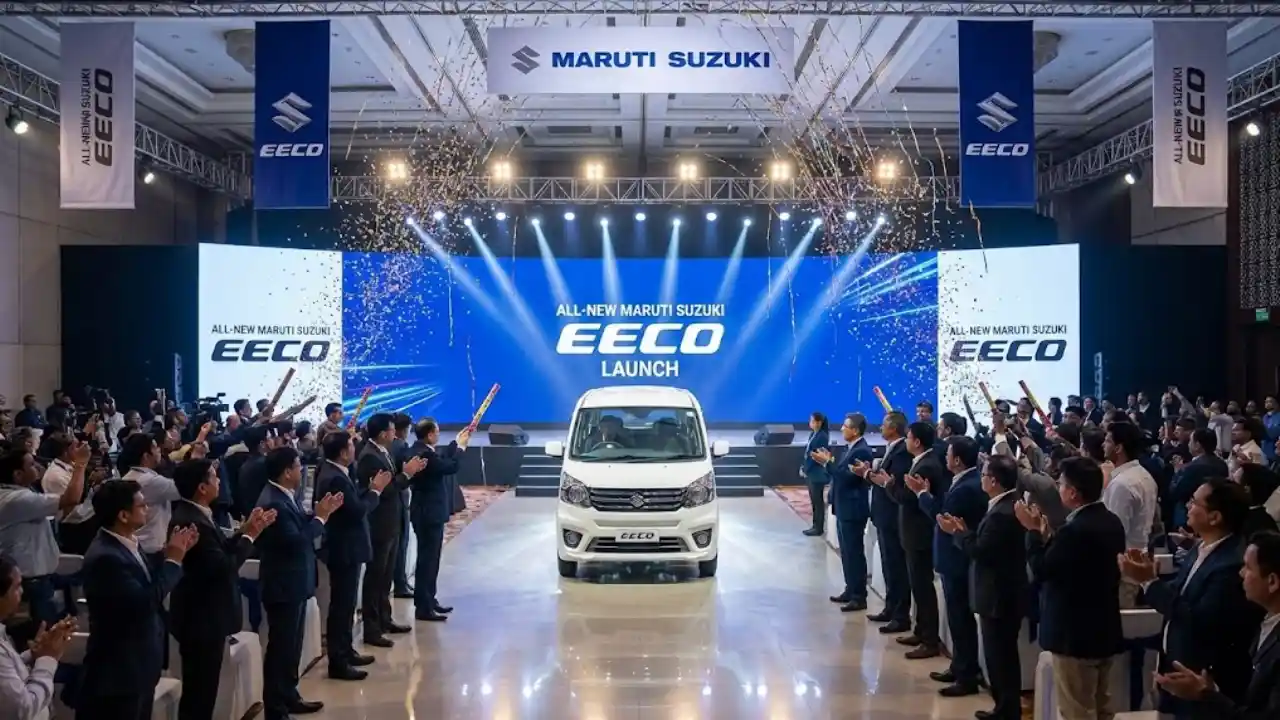
For years, the Maruti Suzuki Eeco has been India’s workhorse. Cab drivers swear by it. Small businesses depend on it. Families in tier-2 and tier-3 cities pack into it for long road trips. It’s practical, cheap to run, and nearly indestructible.
But let’s be honest—it’s also been a rolling safety concern.
No airbags. No ABS. A design that hasn’t changed since the early 2000s. The Eeco was grandfathered into a different era of automotive regulations, one where “affordable” often meant “bare minimum.” That’s changing now. Maruti has launched an updated Eeco with safety features that should have been standard years ago, keeping the same 1198cc engine, and pricing it at just over ₹5 lakh.
It’s not a reinvention. It’s an overdue correction.
What’s Actually New Here
The headline feature is the addition of dual front airbags and ABS with EBD. These aren’t luxuries—they’re basics that most cars have had for a decade. But for the Eeco, this is significant. The vehicle has long been criticized for its crash test performance, and while airbags alone won’t fix structural weaknesses, they’re a step toward making the van less of a gamble in an accident.
The 1198cc petrol engine remains unchanged. It’s the same four-cylinder unit that’s been under the hood forever—reliable, fuel-efficient, and adequate for city driving. Don’t expect any power surge. This is still a vehicle built for utility, not excitement. But that’s also the point. Eeco buyers don’t want complexity. They want something that starts every morning and doesn’t cost a fortune to maintain.
Maruti has also retained the seven-seater and five-seater configurations, along with the cargo variant. The real question is whether the safety upgrades justify the price increase—and whether buyers who’ve long chosen the Eeco for its rock-bottom cost will accept paying more.
The Price Question
At just over ₹5 lakh (ex-showroom), the updated Eeco is still one of the cheapest seven-seaters you can buy in India. But it’s no longer the absolute bargain it once was. Previous variants started closer to ₹4.5 lakh, and in a segment where every ten thousand rupees matters, that difference shows up in monthly EMIs and down payments.
Still, compare it to anything else with similar seating capacity and you’ll struggle to find better value. The Renault Triber starts higher. The Maruti Ertiga is in a different price bracket altogether. For commercial buyers—taxi operators, small delivery services, tour operators—the Eeco’s combination of low entry cost and minimal running expenses still makes sense.
What’s less clear is whether private buyers, especially first-time car owners, will see the updated Eeco as good enough. The van has always had an image problem. It’s seen as functional, not aspirational. Adding airbags helps with safety, but it doesn’t change the fact that the Eeco feels like a product from another decade.
Who This Is Really For
The Eeco has never been about winning design awards or impressing neighbors. It’s built for people who need space, reliability, and affordability—in that order.
Taxi and cab aggregators will likely continue buying it in bulk. Fleet operators care about durability and service costs, not infotainment systems or plush interiors. For them, the Eeco is a tool, and tools don’t need to be pretty.
Families in smaller towns who need to move six or seven people regularly will also find value here. School runs, weekend trips to nearby cities, ferrying relatives—these are the scenarios where the Eeco’s practicality shines. The safety features make it a more responsible choice, especially for parents who’ve had to weigh cost against protection.
But urban buyers? That’s trickier. In cities, where perceptions matter and parking is tight, the Eeco competes not just with cars but with expectations. Younger buyers want connected features, better styling, and a sense that their vehicle reflects something about them. The Eeco offers none of that.
What Maruti Didn’t Change
The Eeco’s interior is still spartan. Hard plastics everywhere. Minimal insulation. No touchscreen, no reverse camera, no creature comforts beyond air conditioning (and even that’s optional on the base variant). The seats are functional but not comfortable for long distances. Noise levels are high, especially on highways.
Maruti could have done more here without blowing up the cost. A slightly better dashboard, improved seat cushioning, or even basic sound deadening would have made the cabin feel less like a commercial vehicle. Instead, the focus seems entirely on meeting regulatory requirements, not exceeding them.
The suspension setup is also unchanged—stiff and utilitarian. It handles loads well, which is important for cargo use, but ride quality suffers, particularly on uneven roads. Passengers in the rear rows will feel every bump.
The Bigger Picture
This launch isn’t just about one model. It’s a signal of where India’s automotive market is heading. Safety regulations are tightening. Crash test norms are becoming mandatory. Consumers are more aware of what basic safety looks like, even in budget segments.
Maruti had to update the Eeco. Keeping it on the market without airbags and ABS wasn’t an option anymore. But the fact that it took regulatory pressure—not voluntary initiative—says something about how the company views this segment.
The Eeco will continue to sell. It has an entrenched customer base and a reputation for toughness. But this update feels like the minimum necessary adjustment, not a meaningful evolution of the product.
If you need a no-frills people mover or a workhorse for your business, the Eeco at ₹5 lakh still makes sense. Just don’t expect it to feel like anything more than what it is—a functional box on wheels, now with airbags.